
What Is Steam Distillation? How Essential Oils Are Extracted
Learn how steam distillation works step by step, which essential oils are commonly produced this way, and what buyers should check when sourcing essential oils.
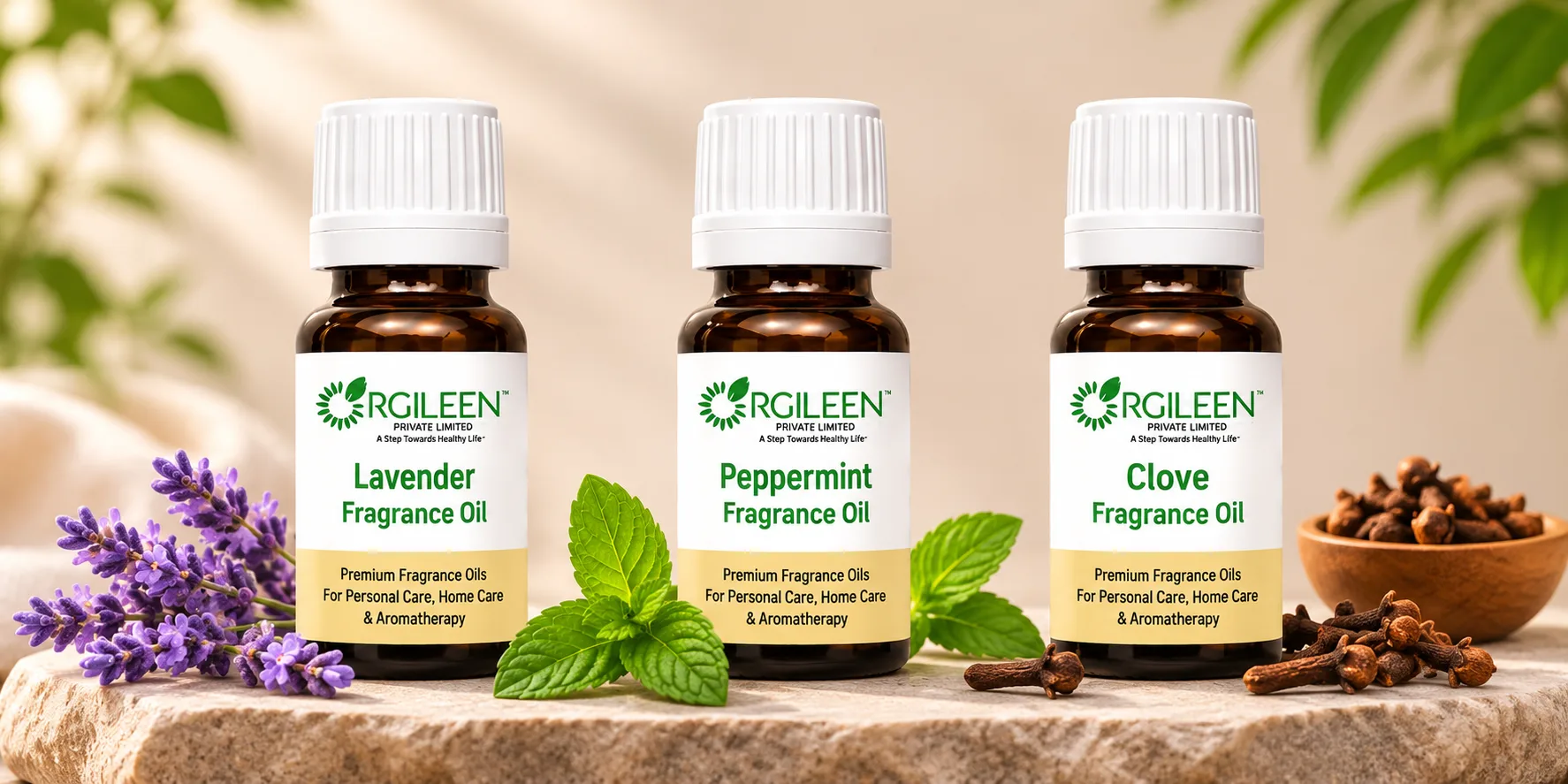
Many essential oils start as leaves, flowers, buds or roots and end up as a clear, concentrated aromatic liquid. For a large number of them, the step in between is steam distillation. It is one of the most widely used extraction methods in the essential oil industry, and understanding it helps buyers read product specifications, ask better questions and choose the right ingredient. This guide explains what steam distillation is, how it works step by step, which oils are commonly produced this way, and what to check when sourcing.
What Is Steam Distillation?
Steam distillation is an extraction process in which steam passes through aromatic plant material and carries volatile compounds into a vapour stream. The vapour is then cooled in a condenser, producing a liquid mixture that can be separated into essential oil and an aqueous phase. The process is commonly used for suitable leaves, flowers, buds, roots, seeds and other aromatic plant materials. The appropriate method depends on the plant species and the properties of its aromatic compounds, so it is not used for every essential oil.
If you are new to the topic, our guide on what essential oils are explains the basics of types, sources and uses.

How Does Steam Distillation Work?
The exact setup depends on the producer and the plant, but the process generally follows these stages.
1. Plant material preparation
Suitable botanical material is selected and prepared according to the extraction process. The plant part used varies by essential oil. Some materials are used fresh, while others may be dried, cut or crushed first.
2. Steam passes through the plant material
The plant material is loaded into a still, and steam is passed through it. The steam contacts the botanical material and carries volatile aromatic compounds with it.
3. Vapour moves into the condenser
The vapour containing water and volatile compounds leaves the still and passes through a cooling system.
4. Condensation
Cooling converts the vapour back into liquid, forming a mixture of water and essential oil.
5. Separation
The condensate is collected in a separating vessel. Where the physical properties allow, the essential oil separates from the aqueous phase, because oil and water do not mix and have different densities. The aqueous phase may be retained as a hydrosol when it is produced and handled appropriately.
6. Quality assessment and storage
The recovered oil is assessed against suitable specifications and stored in compatible, appropriately closed packaging under recommended conditions.
Why Is Steam Distillation Commonly Used?
Steam distillation is widely used because it can recover volatile aromatic compounds from many botanical materials without requiring a conventional organic solvent as the extraction medium. It is also a well-established process that can be scaled from small stills to industrial equipment.
Its suitability depends on the botanical material, the desired aromatic profile, the operating conditions and the stability of the compounds involved. Excessive heat or unsuitable processing conditions can affect some sensitive constituents, so the method must be selected and controlled appropriately.
Which Essential Oils Are Commonly Steam-Distilled?
Many well-known essential oils are produced by steam distillation. Examples include:
- Clove oil: commonly obtained from clove buds, leaves or stems, depending on the product.
- Peppermint oil: commonly obtained from peppermint leaves and aerial parts.
- Citronella oil: commonly obtained from suitable Cymbopogon grass species.
- Rosemary oil: commonly obtained from rosemary leaves and flowering tops.
- Ginger oil: commonly obtained from ginger rhizomes.
The plant part and extraction method should always be checked against the specific product specification.
Is Every Essential Oil Made by Steam Distillation?
No. Citrus peel oils such as orange and lemon are commonly obtained by cold pressing, which is a mechanical process. Some delicate flower materials are processed by other methods, such as solvent extraction, which yields products like absolutes. A product's name and its production method should be confirmed with the supplier rather than assumed.
| Method | How it works | Typical materials |
|---|---|---|
| Steam distillation | Steam carries volatile compounds out of plant material; the vapour is condensed and the oil separated | Leaves, flowers, buds, roots, seeds |
| Cold pressing | The oil is mechanically expressed from the material | Citrus fruit peels |
| Solvent extraction | A solvent dissolves aromatic compounds, which are then recovered | Some delicate flowers (producing absolutes and similar products) |
What Happens to the Water? Hydrosols Explained
After separation, the aqueous phase that remains contains traces of the plant's aromatic compounds. When it is produced and handled appropriately, it can be retained as a hydrosol, sometimes called an aromatic water. Hydrosols are used in personal care and other applications and have their own storage requirements.
What Should Buyers Check When Sourcing Essential Oils?
Knowing the extraction method is one part of assessing a product. When requesting an essential oil for manufacturing, check:
- Botanical name and plant part
- Extraction method
- Aroma profile and appearance
- Applicable technical specifications
- Certificate of Analysis (COA), where available
- Safety Data Sheet (SDS/MSDS)
- Packaging, storage conditions and shelf life
- Suitability for the intended formulation
The correct selection depends on the final application and its quality and safety requirements. Testing a sample in your own formulation before a bulk order is good practice.
Conclusion
Steam distillation is an important method for producing many aromatic essential oils. Understanding the process gives buyers a clearer basis for evaluating product identity, extraction method and technical documentation. Orgileen supplies a range of essential oils and other ingredients for business customers. You can explore the available product range or request a quote with your product requirements, intended application and quantity.
Frequently Asked Questions
What is steam distillation in simple words?
It is a process that uses steam to carry the aromatic compounds out of plant material. The steam is then cooled back into liquid, and the essential oil is separated from the water.
Is steam distillation used for all essential oils?
No. Many essential oils are steam-distilled, but citrus peel oils are usually cold pressed, and some aromatic materials use other methods.
What is the difference between an essential oil and a hydrosol?
The essential oil is the concentrated aromatic oil that separates from the water. The hydrosol is the aromatic water that remains and can be retained when properly produced and handled.
Does the extraction method affect quality?
It can influence the aroma profile and composition, along with the plant material and process controls. Ask for the extraction method and a COA to assess a specific product.